Welcome to Mind Body Therapy

Please set up your pages in the WordPress admin to see the full website.

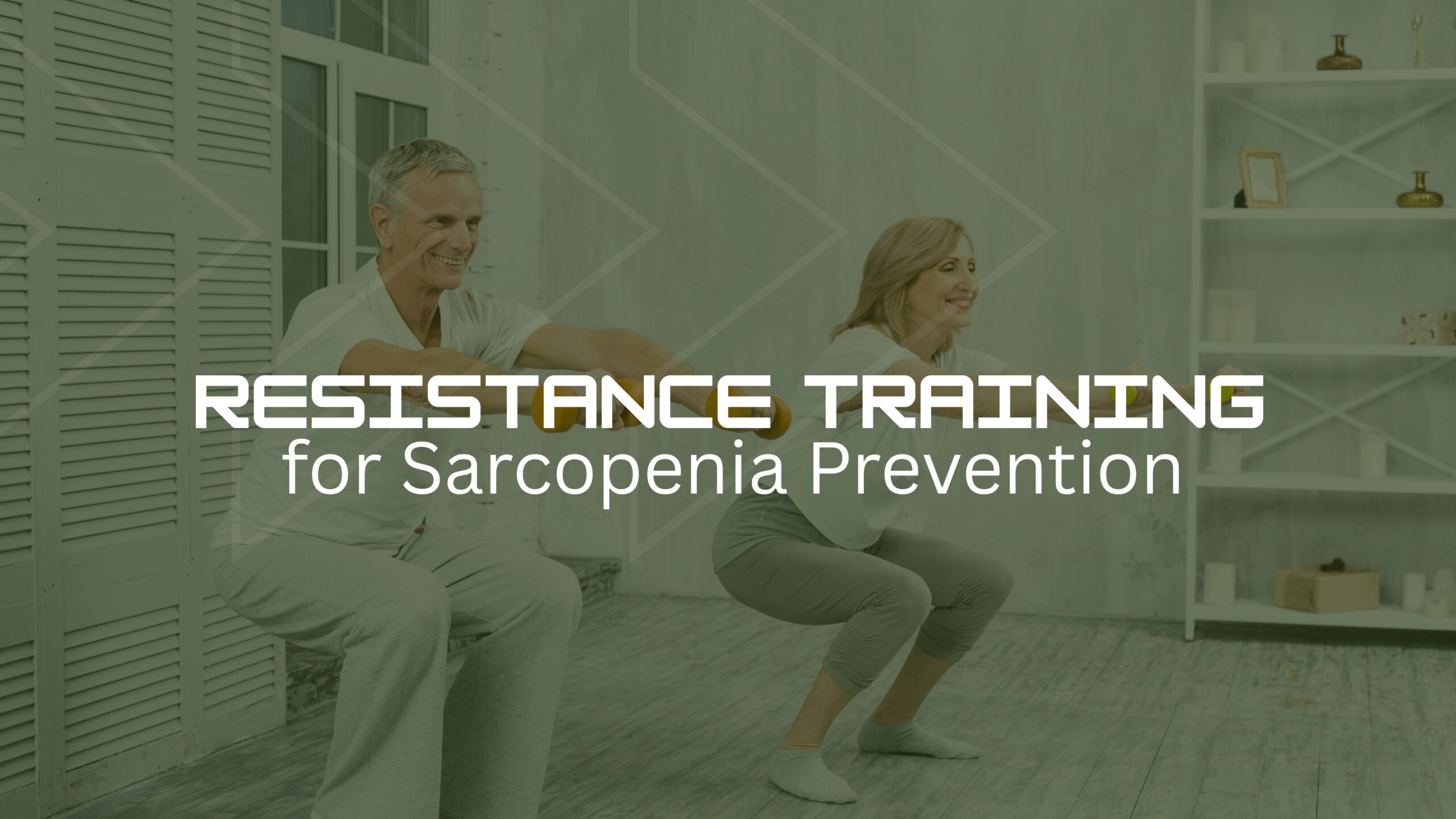
Resistance Training for Sarcopenia Prevention: Why Lifting Heavier Matters

Sarcopenia — the age-related loss of muscle mass, strength and function — is common, but it is not inevitable. For people who care about sports medicine and long-term health, the American Heart Association makes the case clearly: aerobic exercise and muscle-strengthening work both belong in a complete routine, not one or the other. That matters because muscle affects how well you move, recover, and stay independent as you age. Muscle loss starts slowly, so the best time to protect it is well before you feel weak.

Why muscle matters now

Muscle does far more than create shape. It helps you get out of a chair, climb stairs, carry shopping, steady yourself, and recover after illness. Research shows that muscle decline can begin in the 30s and accelerate later in life, which is why small losses often go unnoticed until daily tasks feel harder. That slow drop in strength is linked with poorer balance, slower walking speed and a greater risk of losing independence.

The main drivers are familiar: too much sitting, too little protein, hormonal shifts, and low-grade inflammation. In simple terms, the body stops sending as strong a signal to keep and build muscle. That is exactly why resistance training becomes so important.

The simplest, strongest tool: resistance training

Progressive resistance training is the most reliable way to prevent and reverse sarcopenia. Reviews of aging muscle show that regular resistance exercise can counter many of the changes linked with sarcopenia, and the American Heart Association recommends moderate- to high-intensity muscle-strengthening work at least twice a week as part of a healthy routine.

What makes it work is simple. Resistance training stimulates muscle protein synthesis, improves neuromuscular coordination, and helps keep bone loading strong. It is not about doing endless exercises. It is about giving the muscles enough challenge to adapt.

Practical rules I give every client

These rules are simple, but they work.

  • Train 2–4 times a week. Full-body sessions fit most people well.
  • Use compound movements such as squats, lunges, hip hinges, presses, rows and carries. These recruit more muscle and give you more value per session. 
  • Use progressive overload. Pick a load where the last 2–3 reps feel hard, then add a little more over time. 
  • Beginners should start with bodyweight, bands or machines so they can learn the movement pattern first. 
  • Rest enough. The same muscle group usually needs about 48 hours before it is trained hard again. 
  • Track sets, reps and load so progress is visible, not guessed.

Cardio still matters, but it does a different job

Cardio and strength training are not interchangeable. Cardio supports the heart, lungs and circulation. Resistance training supports muscle size, strength and function. The AHA recommends at least 150 minutes a week of moderate aerobic activity or 75 minutes of vigorous activity, along with muscle-strengthening work on at least two days a week. If you prefer steps, a daily walking target of around 7,000–8,000 steps is a practical goal supported by step-count research.

What to eat and when

Protein is non-negotiable. A useful rule is 20–30 g of protein per meal, because research shows that this amount helps maximise muscle protein synthesis more effectively than very small servings. For people who lift regularly or train at an intermediate level, about 1.2–1.5 g/kg/day is a practical daily target to support muscle maintenance and recovery.

Protein works best as part of the bigger picture. Muscles also need enough total calories, carbohydrates for training fuel, healthy fats, fluids, and a balanced intake of vitamins and minerals. Vitamin D matters when someone is deficient, but it is only one part of the recovery picture. Food quality and consistency matter more than any single nutrient.

A usable starter week

Day 1 — Squat or sit-to-stand, push-ups or press, row, plank.
Day 2 — Hip hinge or deadlift variation, overhead press, pull-ups or assisted pull-ups, farmer carry.

Start each session with a dynamic warm-up that imitates the muscles and movement patterns you will use that day. For example, do bodyweight squats before squats, arm circles before presses, and band pull-aparts before rows. This prepares the joints and nervous system for the work ahead. Research on warm-ups supports dynamic, exercise-specific preparation rather than relying only on static stretching before training.

Finish with unilateral training and mobility work. Unilateral training means single-limb work such as split squats, step-ups, single-leg balance drills or single-arm carries. It is useful because it exposes side-to-side weaknesses and improves stability. End with static stretches in your cool-down so the session finishes with length, control and recovery.

Safety and real-world tips

Learn from a physiotherapist or coach when possible. Start light and focus on control. If you have health issues or recent surgery, clear exercise plans with your clinician first. Employers and occupational health teams can help by offering strength programmes and matching tasks to capacity, which supports safer participation and long-term work capacity.

Quick start checklist

  • Book two 30–40 minute strength sessions this week. 
  • Pick four compound moves you can do safely. 
  • Add one unilateral exercise to each session.
    Eat a protein source at each meal. 
  • Track one progress metric and review it in four weeks.

Conclusion

You can build and protect muscle at any age. Strength training is preventative medicine because it lowers fall risk, preserves function and supports metabolic health. Start with two full-body sessions this week, use compound lifts like squats, lunges, presses and rows, and keep cardio in the plan for heart health. Eat enough protein, recover well, and keep the routine consistent. Small, regular efforts compound into real resilience, and the strength you build now makes daily life easier for years to come. 

The 6-Check Pressure Test: How to Know if a Core Exercise Suits Your Pelvic Floor

How to Know if a Core Exercise Suits Your Pelvic Floor

If you are pregnant, some core moves are not safe right now.

If you have recently had a baby, your body needs gentle progression.

If you are some months into postpartum but still notice leaking, heaviness, or back pain, an exercise might be overloading your pelvic floor.


If you have pelvic-floor symptoms, you need cues and progressions that protect your body.

The 6-Check Pressure Test helps you decide, quickly, whether a core exercise suits your body, using honest, in-the-moment feedback.

Why pressure and coordination matter

Your diaphragm, deep abdominals (especially transverse abdominis), back muscles and pelvic floor form an integrated pressure-management system. When these parts coordinate, your spine and pelvic floor stay supported during everyday tasks and exercise. When they don’t, even ordinary movements—coughing, lifting, or a plank—can cause leaking, a bulge, or discomfort.

Evidence supports pelvic-floor muscle training and coordinated core work during pregnancy and postpartum to reduce urinary incontinence and pelvic-organ prolapse. The Cochrane review shows that PFMT is effective for prevention and treatment of incontinence in pregnancy and after birth.


Research measuring intra-abdominal pressure (IAP) shows that different exercises impose different loads on the pelvic floor. For example, heavy-loaded lifts and certain sit-up variations raise IAP more than low-load, controlled movements. That variation explains why one movement may suit one person but not another, and why testing is essential before progression.

Pelvic-floor symptoms are common and often under-treated. Many new mothers experience incontinence or discomfort yet delay help because they assume it is normal. Early, guided retraining prevents long-term problems and restores confidence to return to the activities you love.

The 6 Checks: Simple and Actionable

Before you commit to a core move (plank, crunch, hollow hold, loaded core work), do only 2–3 controlled reps and observe each check.

1. Breath check — Can you breathe steadily? Holding or gasping spikes internal pressure and can overload the pelvic floor.

2. Belly-dome check — Do you see a midline dome or bulge? Visible doming often means the deep abdominals aren’t engaging. Drop intensity and practise regressions.

3. Pelvic-floor drop check — Do you feel a heaviness or ‘give’ below? That’s a stop signal. Regress and focus on pelvic-floor activation.

4. Leak check — Any urine or stool leakage during the rep? If yes, the load is too high. Return to pelvic-floor training and lower-load core work.

5. Back or neck tension check — Are you gripping elsewhere? Compensation in the neck or low back suggests the movement is too demanding or the form cueing is off.

6. Post-set feel check — How do you feel 30–60 minutes later? Worsening heaviness, bulging, or pain are red flags that the exercise wasn’t right today.

These checks aren’t about blame. Their honest feedback you can use to pick safer progressions.

How to Use the Test Stepwise with Examples?

  1. Pick one movement to test, for example, a knees-down plank, a bodyweight squat, or a glute bridge.
  2. Perform 2–3 reps while monitoring all six checks. Keep breathing steadily.
  3. If any check fails, use a regression: drop to knees, reduce range, shorten hold times, or choose a dead-bug or heel-slide instead. For a plank that causes doming or leaking, try hands-on-box supports, then knees-down holds with breath focus. For sit-ups that cause doming, swap to heel slides and pelvic-floor activation drills.
  4. Practice breath-with-core drills (supine diaphragmatic breathing + gentle pelvic-floor pre-activation) 5–10 minutes daily as a foundation, then retest movements in 2–6 weeks. Coordination often improves before raw strength, so patience pays.

Studies show that home-based, low-load core work combined with PFMT reduces postpartum incontinence and helps close inter-rectus separation compared with no intervention. These findings reinforce the value of gradual, coordinated progressions.

When to Seek Professional Help?

If you repeatedly fail checks, notice a visible bulge, have severe pain, frank bleeding, or worsening incontinence, see a pelvic-floor physiotherapist. Specialist assessment can differentiate between pelvic-floor weakness, overactivity, or prolapse and deliver a targeted plan that includes biofeedback, manual therapy, and a graded exercise ladder.

Move Confidently: One Step at a Time

The 6-Check Pressure Test is a practical tool to evaluate exercises in real time. It puts control back in your hands and helps you build safely. Focus on control, not speed; small, steady gains lead to long-term freedom to lift, laugh, and play without fear.If you would like a personalised 6-Check assessment, a printable checklist, or a guided progression plan, Mind Body Therapy offers pelvic-floor screenings and tailored pre/postnatal programs. Book a one-to-one assessment or coaching session, and receive a stepwise plan and printable checklist designed for your body. Contact Mind Body Therapy today for compassionate, evidence-based pelvic-floor care — personalised assessments, progressive plans, and ongoing support to help you move without fear every day.

Work From Home vs Office Setups: The Hidden Ergonomic Gaps No One Is Talking About

The shift to work-from-home and hybrid schedules brought shorter commutes and flexible hours. What it didn’t promise—and what many discover months in—is that “comfortable” does not equal “ergonomically safe.” Work From Home Ergonomics is often overlooked, and small daily stresses at poorly arranged home workstations accumulate into persistent neck, shoulder, and lower back pain. Reviews during and after the pandemic documented a slight increase in musculoskeletal complaints linked to remote work setups.

The WFH Comfort Myth

Many home setups follow three templates: laptop-only on a dining table, working from a sofa, or perching at a kitchen counter. If you work from home, you might be using one of these options as your workstation. These arrangements may feel cozy, but comfort often masks cumulative load. Soft cushions on your couch and relaxed positions reduce short-term discomfort and encourage forward head posture. This often leads to rounded shoulders and unsupported lumbar curves. These positions elevate muscle activation and joint stress over hours and weeks. Research shows that forward head posture increases neck muscle activity and demand.

Office vs Home: Where Ergonomics Diverge

There are several key differences between an office workstation setup and a WFH setup. These differences favor office workstation as a safe option.

Chair fit & adjustability: Office chairs allow height, depth and lumbar adjustments; many home chairs do not.

Desk height: Office desks support neutral arm angles; dining and coffee tables rarely do.

Equipment and guidance: Offices often supply external keyboards, mice and docking stations and sometimes ergonomics training; many home workers stay on the laptop keyboard and screen.

Screen height & lighting: Fixed monitors are positioned near eye level with controlled lighting; laptops promote downward gaze and higher cervical loading. 

Silent and Gradual Injuries

These are cumulative load injuries. Common symptoms include:

  • Neck pain: It often worsens after long video calls.
  • Lower back ache: It arises from the lack of lumbar support or prolonged flexed sitting.
  • Shoulder tension: It is from elevated shoulders or long mouse reach.
  • Eye strain and headaches: They are from prolonged focus, glare, and reduced blink rate.

These symptoms start mild and escalate; by the time pain appears, tissue tolerance has often already reduced.

Why Does Awareness Alone Fail?

You decide to sit perfectly at the start of the day. However, habit and nervous-system preferences drive you back to familiar postures. As the day passes, you get back to your usual posture at either dining table, on a cozy couch, or at the kitchen countertop. Therefore, ergonomics must pair equipment with behavior change, environmental cues, consistent movement, and scheduled micro-breaks to interrupt sustained postures. So, awareness, discipline, and consistency matter, which help you follow ergonomics principles. 

A Physio-led Ergonomics Approach

As a physiotherapist, I assess workstations using five pillars:

  1. Chair fit: Seat height so feet are flat or on a footrest, seat depth allowing lumbar contact, and adequate lumbar support—add a small lumbar roll if needed. OSHA guidance highlights fitting the job to the person to reduce Musuloskeletal Diseases.
  2. Reach and support: Keyboard and mouse should permit elbows at ~90° and wrists n   neutral; forearm support reduces shoulder load.
  3. Vision: Top third of the screen at eye level or slightly below, minimize glare, and use visual breaks like the 20-20-20 approach to reduce digital eye strain. Evidence supports visual hygiene plus set breaks to reduce symptoms.
  4. Movement: Microbreaks—stand, stretch or walk 1–2 minutes every 20–40 minutes—reduce fatigue and improve recovery. Field studies and reviews show short, regular breaks lower musculoskeletal symptoms.
  5. Integrated solutions: Combine basic hardware (external monitor, keyboard, mouse) with software nudges (timers, reminder apps) to convert good intent into consistent behavior.

Quick Self-Check

You can use this five-item scorecard to evaluate your workstation. If the answer to below questions is yes, you score 1, and if it is no, then you score 0.

  1. Feet support: Are both feet flat on the floor or a footrest, with knees near 90°?
  2. Elbow posture: When typing, are elbows at ~90° and wrists neutral, with keyboard centered in front of your torso? (That means upper arm roughly vertical and forearm roughly horizontal so shoulder muscles don’t overwork.)
  3. Lumbar support: Does your chair support the low back, or do you use a lumbar roll?
    Screen height: Is the top third of your primary screen at eye level or slightly below?
  4. Movement routine: Do you take a microbreak at least every 40 minutes (stand/stretch/walk)?

How to act on your score: If you score ≤3, prioritize raising screen height, restoring lumbar support, repositioning keyboard/mouse, and setting two daily movement reminders. Start with one micro-exercise set (neck rolls, scapular squeezes, gentle spinal twists) and repeat during breaks.

Conclusion

Pain is a late signal; by the time symptoms appear, repetitive stresses have already altered tissue tolerance. Prevention focused on vision, reach, support, and movement is far more efficient than treating chronic pain later. A brief physio-led assessment and a few targeted changes (monitor riser, external keyboard, lumbar roll, microbreak schedule) close most gaps between home and office ergonomics. Start small: change one variable this week and add another the next. Consistent small changes compound quickly, reducing discomfort, improving focus, and building long-term resilience. Make these adjustments this week and reassess in two weeks.

Download the ergonomics e-book for a guided self-assessment, a printable checklist, and five microbreak routines you can start tomorrow.

What Happens When We Don’t Follow Ergonomics – An Informative Guide

The Problem —  Pain is Real, Even in Busy Offices

Many corporate employees in the UAE experience persistent neck, shoulder or lower-back pain. Recent studies show high rates of work-related musculoskeletal disorders in many professions, underlining that pain is common.

Even though ergonomic chairs, adjustable desks, and training are increasingly available, the simple act of “following ergonomics” rarely becomes part of a daily habit. Why? Because the problem isn’t only about equipment, but it is about how people actually think and behave at work.

Why Knowledge Alone Does Not Change Behaviour

Habit and Comfort Bias

Most of us sit in our office chairs as what feels normal to us. Then, a slightly slumped posture or a laptop at the wrong height becomes regular as we feel comfortable after months or years, and habits are hard to break. Research on habit formation shows that, if we want to adopt a new behaviour, it requires consistent repetition and we need to genuinely follow the habits, which will take weeks to months. That’s why a one-off training session rarely changes long-term behaviour. 

The “I Will Do It Later” Trap (Present Bias)

Ergonomic fixes often promise benefit later (less pain in months), while the discomfort of changing position is immediate. Behavioral science calls this present bias because we discount future gains and prefer easy present choices. Small wins that reward people immediately (quick relief, better comfort right away) help flip this trade-off.

Poor Fit – One-Size-Fits-All Solutions Fail

Generic recommendations, such as sit straight, adjust your chair, often ignore individual bodies, tasks, and workflows. If an adjustment makes someone less productive or feels awkward, they will abandon it. Studies of ergonomic adoption repeatedly show that solutions must be customized to fit the job and the person, or else they won’t be used.

Organizational And Social Barriers

Time Pressure and Productivity Myths

Software professionals often work under pressure, and they need to meet their clients’ deadlines. These software professionals sit in one place for longer time, and their work involves some repetitive movements. These factors lead to reduced productivity and increased sick leaves from employees.

Lack of Ownership and Follow-Through

When ergonomics is “HR’s job, line managers and staff assume it’s someone else’s problem. Research shows that adoption improves when workers are themselves involved in designing changes and when managers support and model ergonomic behaviours. When employees and HR managers work together to help choose solutions, they make a difference.

What the Evidence Says? 

Systematic reviews and meta-analyses show that ergonomic interventions can reduce musculoskeletal pain and improve the quality of life. When changes combine equipment, training, and follow-up. However, the effects are smaller when interventions are isolated or not tailored. In short, ergonomics works best as a program, not a one-off solution.

That is great news for employers: investment pays off when programs are designed for real workplaces and include measurement, feedback, and ongoing support.

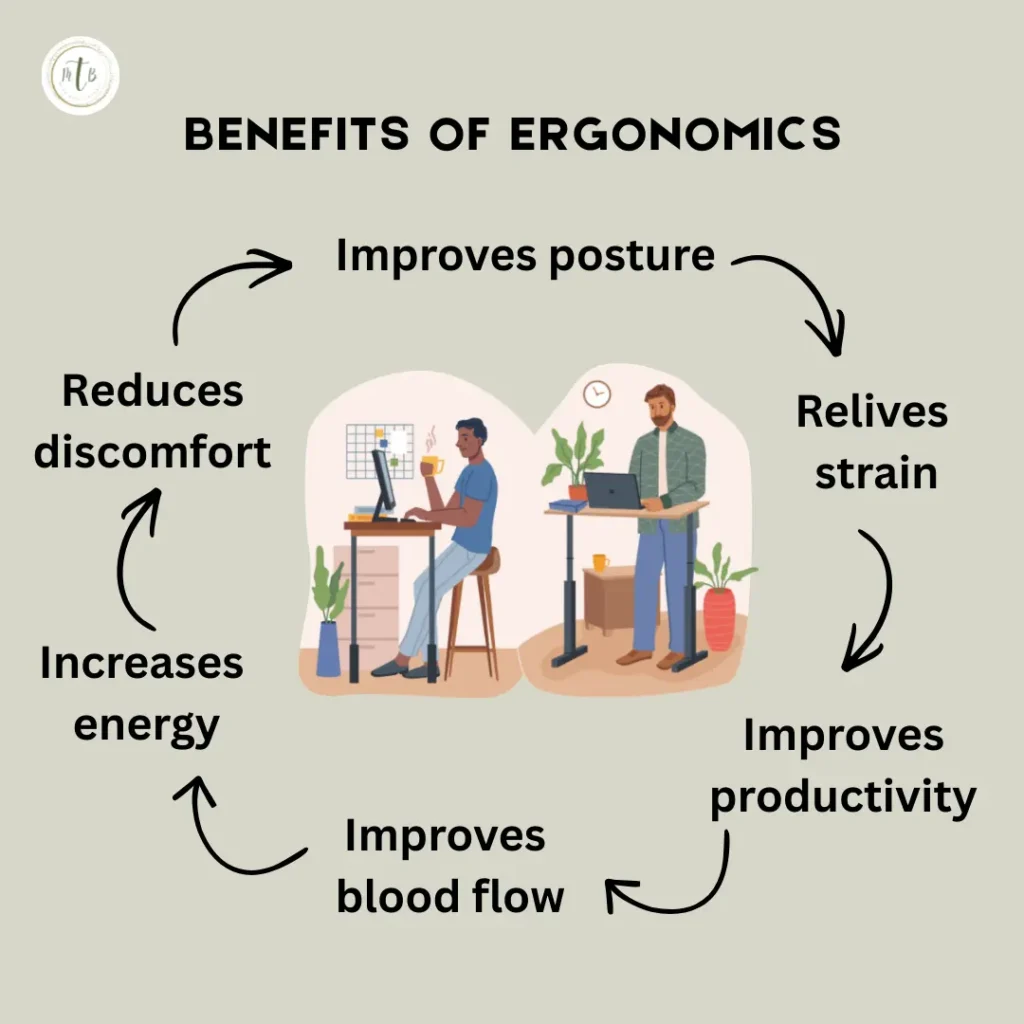
Benefits of workplace ergonomics

Practical Steps That Actually Increase Compliance

Here are evidence-informed, practical steps that Dubai corporates can use.

1. Co-design With Your Teams

Invite staff to test and choose solutions. When people help pick the chair, set the height, or select a screen setup, they’re far more likely to keep using it. When offices adopt collaborative ergonomics, they have a higher chance of implementing the changes.

2. Start with Micro-Changes and Immediate Wins

Instead of a long theoretical lecture, it is better to give 2–3 practical tips that show immediate comfort gain (monitor height, chair depth, short posture cue). Immediate relief creates a reward loop that supports habit formation.

3. Make Ergonomics a Daily Habit

Embed 2-minute posture checks into daily rituals (team huddles, coffee breaks) and equip managers to model them. Protect short “active minutes” in calendars; remove the perception that ergonomics competes with productivity.

4. Measure, Feedback, Repeat

Use simple KPIs: number of people trained, short pain surveys, and quick workstation audits. Share small wins (e.g., “30% fewer neck complaints in Team A this quarter”). When employees see these real-life statistics, it motivates them to follow habits.

5. Use Behavioural Nudges

Set up prompts (desktop reminders, stickers on monitors, short guided micro-breaks) and reward consistency. Small incentives or recognition for teams that improve posture habits can accelerate adoption.

Quick Checklist: What HR or Team Leads Can Do This Week

  • Run a 15-minute demo for a team showing 3 quick adjustments.
  • Ask one team member to co-lead a workstation audit next week.
  • Put a 2-minute “stand & stretch” slot in daily meetings.
  • Start a simple pain log (one question) to measure change.

If you want ready-to-run programs, MindBody UAE runs hands-on corporate ergonomics sessions tailored to busy Dubai teams practical, short, and focused on lasting behaviour change. 

Final Thought

Ergonomics is not just about chairs or keyboards, but it is about people, habits, and the workplace systems that support them. In Dubai’s fast-moving corporate life, the smartest ergonomics programs are those that make healthy choices easier, faster and socially normal. With the right mix of co-design, quick wins, and manager support, pain becomes something you solve, not something you accept.

Take the Next Step

Before you buy another chair or standing desk, find out what’s really holding your team back.

💡 Download our free e-book for real corporate case studies on how awareness turned into action.
📞 Book a free discovery call to learn how we can customize an ergonomic wellness plan for your company.